Sonographic Determination of Carotid Artery Intima-Media Thickness among Apparently Healthy Adults in Kano Metropolis 0 1
DOI:
https://doi.org/10.60787/sjhrs.vol1no1.13Keywords:
Carotid intima-media thickness, ultrasonography, common carotid artery, healthy adultsAbstract
Background: Carotid intima-media thickness (CIMT) is a non-invasive ultrasonographic marker of subclinical atherosclerosis and an established predictor of future cardiovascular events. However, normative CIMT data among apparently healthy adults in Northern Nigeria remain limited, restricting its clinical application for cardiovascular risk assessment.
Aim: This study was aimed at evaluating common carotid intima-media thickness and its relationship with demographic, anthropometric, haemodynamic, biochemical, and metabolic parameters among apparently healthy adults in Kano Metropolis, Nigeria.
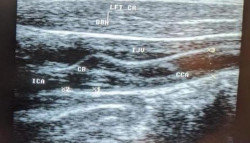
Materials and Methods: This was a cross-sectional study included 85 apparently healthy adults (43 males and 42 females) aged 30–60 years recruited from selected hospitals in Kano metropolis between January 2025 and April 2026. Anthropometric indices, blood pressure, fasting plasma glucose, glycated haemoglobin (HbA1c), lipid profile, and serum creatinine were measured using standard procedures. Right (RCIMT), left (LCIMT), and mean carotid intima media thickness (mCIMT) were assessed using high-resolution B-mode ultrasonography with a 7.5-MHz linear transducer. Data were analysed using independent-samples t-test, Pearson's correlation, and multiple linear regression. Statistical significance was set at p< 0.05. The participants had a mean age of 44.42±7.22 years. The overall mean right, left, and mean common carotid intima-media thicknesses (RCIMT, LCIMT, and mCIMT) were 0.59±0.02 mm, 0.59±0.02 mm, and 0.59±0.02 mm, respectively. No significant sex differences were observed in RCIMT (p = 0.538), LCIMT (p = 0.622), or mCIMT (p = 0.573). Mean CIMT increased progressively across age groups, from 0.57±0.02 mm among participants aged 30–39 years to 0.61±0.01 mm among those aged 50–60 years. Pearson's correlation analysis demonstrated a strong positive association between age and mCIMT (r = 0.670, p < 0.001) and a weak positive association between triglyceride levels and mCIMT (r = 0.261, p = 0.016). No significant correlations were observed between mCIMT and anthropometric, haemodynamic, glycaemic, lipid (except triglycerides), or renal function parameters. Multiple linear regression analysis showed that none of the evaluated clinical variables independently predicted mCIMT after adjustment for potential confounders (p > 0.05)
Conclusion: Normative value of common carotid intima-media thickness among apparently healthy adults in Kano Metropolis was established. No significant sex- or side-related differences. There was no significant relationship between mCIMT and demographic, anthropometric, haemodynamic, glycaemic, lipid, or renal variables
Downloads
References
1. O'Leary DH, Polak JF. Imaging of atherosclerosis: carotid intima-media thickness. Eur Heart J. 2010;31(14):1682- 1689. doi:10.1093/eurheartj/ hq185
2. Touboul PJ, Grobbee DE, den Ruijter H. Assessment of subclinical atherosclerosis by carotid intima-media thickness: technical issues. Eur J Prev Cardiol. 2012;19(Suppl 2):18-24. doi:10.1177/2047487312448990
3. Engelen L, Boutouyrie P, Ferreira I, Stehouwer CDA, Laurent S, et al. Normal and reference values for carotid intima- media thickness. Artery Res. 2011;5:141. doi:10.1016/j.artres.2011.10.215
4. Den Ruijter HM, Peters SAE, Anderson TJ, Britton AR, Dekker JM, et al. Common carotid intima-media thickness measurements in cardiovascular risk prediction: a meta-analysis. Eur Heart J. 2013;34(30):2368-2380. doi:10.1093/eurheartj/ehs380
5. Lim TK, Lim E, Dwivedi G, Kooner J, Senior R. Normal value of carotid intima- media thickness: a surrogate marker of atherosclerosis: quantitative assessment by B-mode carotid ultrasound. J Am Soc Echocardiogr. 2008;21(2): 12-116. doi:10.1016/j.echo.2007.05.002
6.Baldassarre D, Nyyssönen K, Rauramaa R, de Faire U, Hamsten A, et al. Carotid intima- media thickness for cardiovascular risk assessment: Systematic review and meta- analysis. Atherosclerosis. 2013; 228, 1- 11DOI: 10.1016/j.atherosclerosis.2013.01.0 25 xternal Link
7. de Groot E, van Leuven SI, Duivenvoorden R, Meuwese MC, Akdim F, et al. Sonographic Determination ofMeasurement of carotid intima-media thickness to assess progression and regression of atherosclerosis. Nat Clin Pract Cardiovasc Med. 2008;5(5):280-288. oi:10.1038/ncpcardio1163
8. Nezu T, Hosomi N, Aoki S, Matsumoto M. Carotid intima-media thickness for atherosclerosis. J AtherosclerThromb. 2016;23(1):18-31. doi:10.5551/jat.31989
9.Lorenz MW, Markus HS, Bots ML, Rosvall M, Sitzer M. Prediction of clinical cardiovascular events with carotid intima-media thickness: a systematic review and meta-analysis. Circulation. 2007;115(4):459-67. doi:0.1161/ 106.628875.
10. Stein JH, Korcarz CE, Hurst RT, Lonn E, Kendall CB, Mohler ER III, et al. Use of carotid ultrasound to identify subclinical vascular disease and evaluate cardiovascular disease risk: a consensus statement from the American Society of Echocardiography Carotid Intima-Media Thickness Task Force. J Am Soc Echocardiogr. 2008;21(2):93-111. doi:10.1016/j.echo.2007.11.011.
11. Hall JE, Hall ME. Guyton and Hall textbook of medical physiology. 14th ed. Philadelphia: Elsevier; 2021.
12. World Health Organization. WHO European regional obesity report 2022. Copenhagen: WHO Regional Office for Europe; 2022.
13. NCD Risk Factor Collaboration (NCD- RisC). Worldwide trends in body massindex, underweight, overweight, and obesity from 1990 to 2022: a pooled analysis of 3663 population-based studies with 222 million participants. Lancet. 2024;403(10431):1027-50.
14. American Diabetes Association Professional Practice Committee. 2. Diagnosis and classification of diabetes: Standards of care in diabetes—2025. iabetes Care. 2025;48 (Suppl 1):S20-S38. doi:10.2337/dc25-S002.
15. Ference BA, Ginsberg HN, Graham I, Ray KK, et al. Low-density lipoproteins cause atherosclerotic cardiovascular disease. Eur 101 The Sub-Saharan Journal of Health and Rad iation Sciences |Carotid Arter nntima-Med ia Thickness Heart J. 2017;38(32):2459-72. doi:10.1093/ eurheartj/ehx144
16. Mach F, Baigent C, Catapano AL, Koskinas KC, Casula M, Badimon L, et al. 2019 ESC/EAS guidelines for the management of dyslipidaemias: lipid modification to reduce cardiovascular risk. Eur Heart J. 2020;41(1):111- 88. doi:10.1093/eurheartj/ehz455.
17. Kidney Disease: Improving Global Outcomes (KDIGO) CKD Work Group. KDIGO 2024 clinical practice guideline for the evaluation and management of chronic kidney disease. Kidney Int. 2024;105(4 Suppl):S1-S150.
18. Ahmadu MS, Mubi BM, Adeyomoye AAO, Ahidjo A, Adeyinka AO, Tahir AA. Sonographic evaluation of carotid intima- media thickness in adult diabetic patients in University of Maiduguri Teaching Hospital, North Eastern Nigeria. Borno Med J. 2015;12(2):63-75.
19. Umeh EO, Agunloye AM, Adekanmi AJ, Adeyinka AO. Ultrasound evaluation of intima-media thickness of carotid arteries in adults with primary hypertension at Ibadan, Nigeria. West Afr J Med. 2013;32:62-7.
20. Ali AM, et al. Sonographic evaluation of common carotid artery intima-media thickness in adults with coexisting type 2diabetes and hypertension: a case-controlled study. DUJOPAS. 2023;9(3a):19-28.
21. Kpuduwei SP, Kiridi EK, Ibegu O, Amasiatu VC. Normative clinical reference for intima- media thickness of carotid arteries among Nigerian adults. J West Afr Coll Surg. 2022;12:1-4. 22. North BJ, Sinclair DA. The intersection between aging and cardiovascular disease. Circ Res. 2012;110(8):1097-108. doi:10.1161/CIRCRESAHA.111.246876.
23. Nilsson PM. Early vascular aging (EVA): consequences and prevention. Vasc HealthRisk Manag. 2021;17:373-81. doi:10.2147/VHRM.S109545
Published
Issue
Section
License

This work is licensed under a Creative Commons Attribution-NonCommercial-ShareAlike 4.0 International License.